
What the Pierce County Owner Record Shows
The Pierce County Owner Name field reflects the tax roll's view of who holds the parcel. It shows the owner of record today. A single parcel response displays owner and mailing information and the physical Property Address. It also includes the municipality, the parcel number, and a tax-year status legend. What it lacks matters too. No verified last-sale date appears. No complete deed reference is included, so treat those fields as absent rather than implied.
| Owner Name | Name or co-owner names shown on the parcel result |
|---|---|
| Owner Address 1/2 | Mailing or billing address, which can differ from situs |
| Property Address 1/2 | Physical property address fields |
| Parcel Number | County key that connects the record to GIS |
| Municipality | City, village, or town description for jurisdiction checks |
| Tax Year / status | Year label and current, delinquent, or other payment legend |
Owner of record is not the same as occupant. A mailing address may point to an entity. It could be a lender or servicer. It could also be some other bill destination. Treat it as a contact clue for a property matter, never as proof of residence. A recently recorded deed can outrun the roll entry. The card shows no verified sale-date field.
The captured parcel result shows two names. A mailing address beside them differs from the parcel situs.
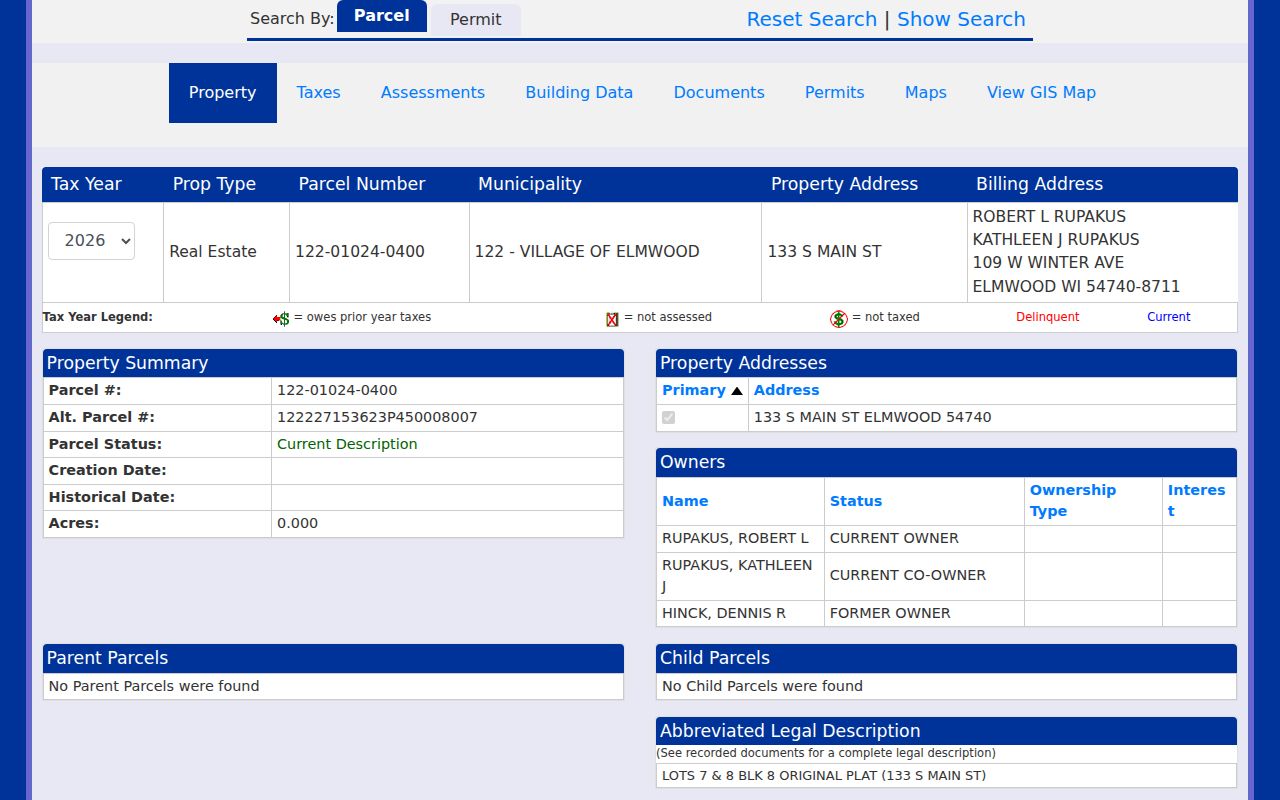
Match every address label to its parcel number. That keeps an owner's mailing address from being mistaken for the property location.
Pierce County Roll Does Not Date Changes
Pierce County's public report says tax-payment information updates nightly. That promise covers payments only. Owner names, assessed values, and deed references may not refresh overnight. The county publishes no statement about how long a new owner takes to reach the tax roll. So the displayed owner is the roll's current entry, not a same-day deed notice.
After a recent transfer, compare the report against the newest recorded instrument. Keep the recording date, grantor, grantee, parcel number, and legal description together. If the deed is newer, ask the assessor or Land Management when the roll will reflect the change. Don't assume a refresh period.
A payment status can read current while an ownership field still waits. Those are separate facts inside the county record system.
Pierce County Owner Field Uses Parcel Key
The county parcel layer spells out the cross-reference. Owner Name, Owner Address 1/2, Property Address 1/2, Parcel Number, Alternate Parcel Number, Municipality Description, and Ownership Interest all sit in separate fields. Plat description, lot, block, acreage, school district, and TIF/TID district round out the record. The GIS layer helps confirm that an owner name attaches to the expected municipality. It also confirms the land description.
Naming differs across systems. The public Property Information Search calls its key Computer Number. It splits the key into segmented inputs. GIS labels it Parcel Number. One example is 122-01024-0400, though the county has not explained what each segment means. Use the whole number exactly as displayed. Give the office that number when asking it to check an owner record.
Common surnames return many parcels. Compare the first name, municipality, acreage, legal description, and mailing address. Pierce County recommends adding a first name for surnames like Johnson, Peterson, Larson, Huppert, and Hines.
Confirming the Current Pierce County Owner
When a sale, estate, boundary request, or title question turns on the current owner, rely on the newest matching deed. The county land-record index opens through guest sign-in and warns that it serves as a general index rather than a detailed site-specific analysis. Its online coverage year and post-login search fields remain unconfirmed, so ask the Register of Deeds if the search path is unclear.
- Record the Owner Name, parcel number, municipality, and legal description from the county property report.
- Find the newest recorded instrument that matches the same property and review its grantee and grantor.
- Compare the deed's legal description with the parcel record instead of matching only the street address.
- Contact the Register of Deeds for a certified copy or the assessor for a roll question.
- Owner of record
- The name the tax roll displays for the parcel at the time of that record.
- Grantee
- The party receiving an interest in a recorded deed.
- Vesting
- The capacity or form in which a deed names a recipient, such as a trustee or entity.
- Recording date
- The date an instrument entered the county land-record system.
A present owner record and a prior-owner chain answer different questions. The Pierce County deed records page explains document types and copies.
Company and Trust Names Can Hold Title
An owner field can name a company, trustee, personal representative, estate, or life tenant rather than an individual. Read the capacity line on the deed. Then use the exact grantee name as written. A Wisconsin DFI lookup can confirm a registered entity's name, status, agent, office, and filing history, though the agency notes that domestic LLC members and owners generally are not listed.
When a transfer runs through an estate, the public WCCA docket can surface a Pierce County probate case. Documents like a petition, order, inventory, or personal-representative deed may need to be requested from the court clerk or Register of Deeds. A death certificate is not the conveyance. Keep that distinction in mind when tracing Pierce County property records through a probate transfer.
The entity's agent may receive business mail. That address does not establish the current owner's residence. Keep the record roles distinct. Wisconsin DFI's corporate search provides official company details.
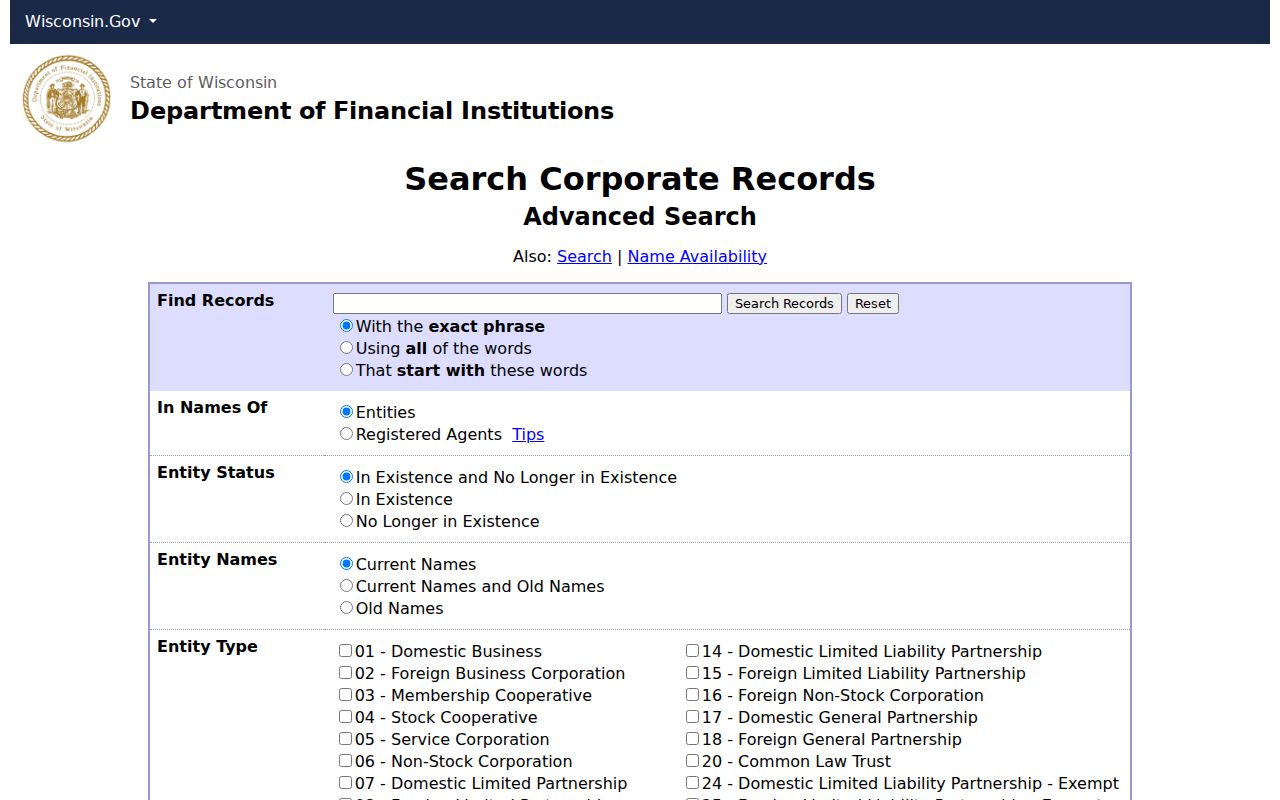
Verify the entity name with the filing, then verify the parcel transfer with the deed.
River Falls Ownership Depends on the County
River Falls straddles the Pierce and St. Croix county line. A city name or postal address does not decide which assessor roll or Register of Deeds applies. Check the GIS municipality data and the parcel number before asking who owns a River Falls property. Confirm the county first.
The same caution applies near the city edge. Municipal, school, or TIF/TID fields can differ from an adjacent parcel even when both share a street. Check each parcel separately in its own county system. River Falls addresses commonly use ZIP 54022, yet postal boundaries do not define county jurisdiction.
Keep four details together for a city-edge property: the county, the municipality, the school district, and the parcel number. Do this before requesting a deed or permit file.
Using the Pierce County Mailing Address
The county's mailing address field can help with a routine property matter. The field may belong to an entity or a bill recipient rather than the occupant. Use it only for a legitimate property request. Keep personal data from older deeds private. Ask the custodian about any redaction rules that apply.
Wisconsin's Safe at Home program gives eligible participants a substitute address. Court redaction policy can also mask specified personal details. A missing ordinary address does not mean the owner field is false. It also does not mean an interest is absent. Either way, the owner of record may still be valid.
Lawful use. Use a public mailing address for a property-related question. Do not use a current owner record to stalk, harass, threaten, or harm anyone.
Requesting a Current Pierce County Owner Check
A tax roll and a deed can disagree. Save both results instead of replacing one with the other. Note the parcel number, the roll's Owner Name and Tax Year, the deed's recording date, and the grantor and grantee names. Compare the full legal description as well. A street number alone can point to a different parcel. A recent instrument can also precede a later update to the tax roll.
The county's land-record portal uses guest sign-in and labels its index as general information. It publishes no online coverage cutoff. Coverage varies by year. If a property does not appear, ask the Register of Deeds which index fields and years cover that parcel, and ask whether the office can provide the instrument or a certified copy. The portal posts no copy fee, so request the current amount from the custodian.
For a public record request, identify the full parcel number and the exact instrument or roll entry you need. Request an electronic copy when one is available. Wisconsin Public Records Law requires a response as soon as practicable and without delay. The law sets no fixed deadline. A records request does not refresh the website's owner field. It obtains a document or confirmation from the office that keeps the record. Titles are a different matter. For a title opinion or a complete ownership chain, use a qualified title professional.