
Find a Pierce County Parcel Owner
The county report and the deed index answer the ownership question together. Its search page offers Computer Number, Parcel Address, and Parcel Owner modes. For an address query, enter only the house or rural fire number, keeping any leading N or W, and leave off the street name. A surname alone can start an owner search. The parcel number is the most exact key once a result appears.
- Search the county Property Information Search by address number or owner name, following its field instructions.
- Capture the Owner Name, Owner Address, Property Address, municipality, parcel number, and legal description.
- Search the Register of Deeds index for the newest instrument that matches the grantee and the same land description.
- If an entity or estate is named, follow its exact name and capacity in the relevant public filing or probate record.
- Use the mailing address only as a correspondence clue. It does not identify who occupies the property.
This route returns the name shown in official property records. For the present roll field and how a recent closing changes it, see the current owner record explanation.
Where Pierce County Names an Owner
County records name owners for different reasons. The property report carries the tax-roll Owner Name and mailing address. The Register of Deeds index lists a grantee on each recorded instrument. GIS repeats the parcel owner and address beside the mapped geometry. Wisconsin DFI can identify a registered agent or office for an entity, though it does not generally list domestic LLC members or owners.
| Record source | What it says about ownership | Best use |
|---|---|---|
| Property report | Owner Name and mailing address on the tax roll | First address-to-parcel step |
| Register of Deeds | Grantee and grantor on recorded instruments | Confirm a transfer and legal description |
| GIS parcel layer | Owner, property address, owner address, and parcel geometry | Match a name and parcel to location |
| DFI corporate search | Entity name, status, agent, office, filings | Clarify a registered entity name |
These sources answer different questions on different dates. A tax-roll owner field is not a deed, and an entity's registered agent is not necessarily its owner.
Owner Address and Property Address Differ
Pierce County parcel fields keep Owner Address 1/2 separate from Property Address 1/2. The owner address may be a billing destination. It may be an entity mailing address, or another address chosen for tax notices. The property address describes the parcel's situs. The county's sample record shows the split plainly. A Village of Elmwood property lists two owner names, and its mailing address differs from the S Main Street situs.
Read the municipality, parcel number, acreage, plat, lot, and legal description before calling an address result a match. A rural fire number may not look like its postal equivalent. The public report says to omit the street name from an address query. Common surnames such as Johnson, Peterson, Larson, Huppert, and Hines may need a first name to narrow the search. The sample Pierce County parcel result shows owner and mailing fields side by side.
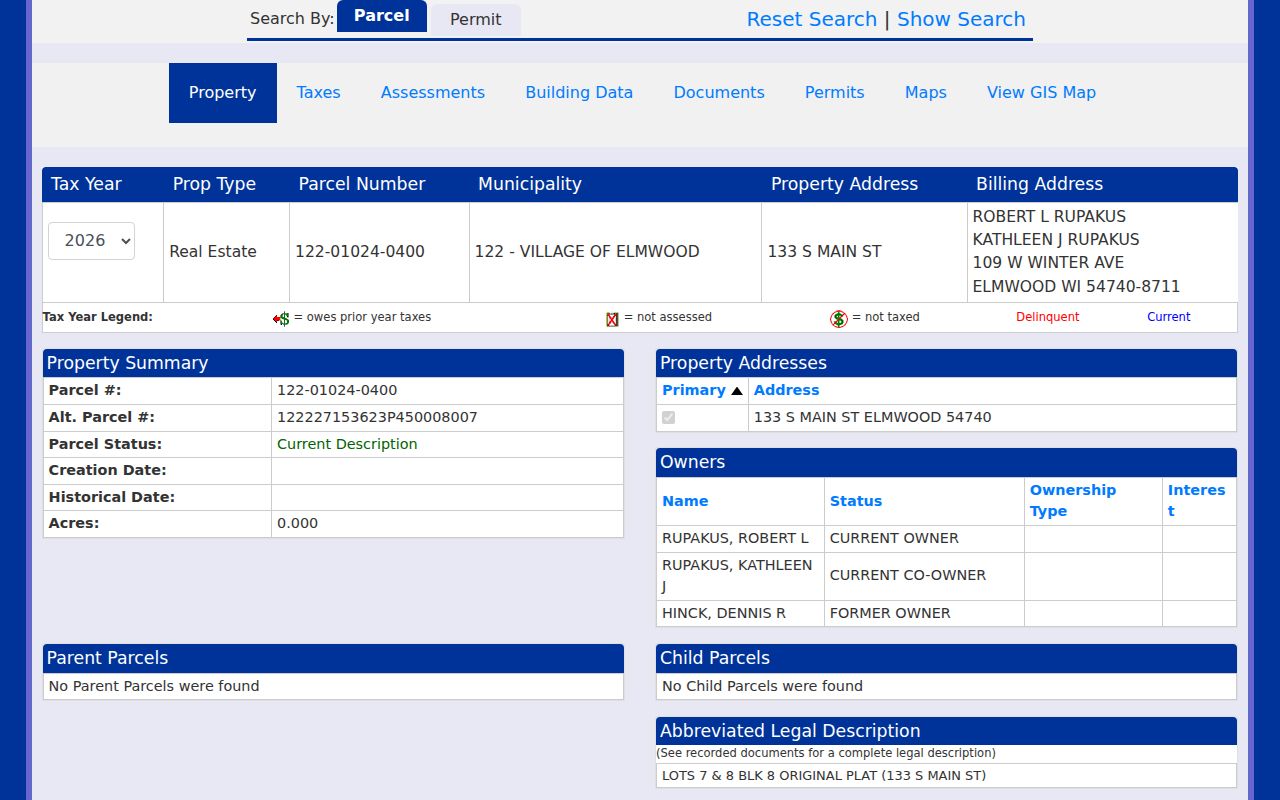
A mailing field is a useful address for property business. Still, it does not prove residence, current occupancy, or a person's full ownership interest.
Comparing Pierce County Ownership Sources
Match the source to the question. The county roll is the broad owner-of-record starting point. The newest recorded deed supplies the transfer evidence. GIS ties a record to a polygon and its municipal description. When an entity or estate holds title, DFI or court records can add context. A source table is a route between custodians, not one blended database.
| Source | Owner Info It Gives | Access |
|---|---|---|
| County property report | Owner Name, mailing address, parcel, municipality | Public online report |
| Register of Deeds | Recorded grantor, grantee, and land description | Guest land-record portal; certified copy from office |
| County GIS | Parcel geometry, owner/address fields, district and plat clues | Public map and ArcGIS service |
| Wisconsin DFI | Registered entity, agent, status, and filings | Public corporate search |
A named owner and a person at the property are different facts. These systems identify owners or grantees, never current occupancy. Do not use the records to target a person. For title work, compare the recorded instruments and seek professional review.
Confirm the Latest Pierce County Deed
The county property report is a practical bridge to recorded documents. Copy the parcel number, legal description, and owner name. Then search the Register of Deeds index for the most recent instrument matching the same land. Read the grantee and grantor exactly as written. Note the recording reference, and compare the parcel description with the assessor record.
The public land-record portal opens with guest sign-in. It cautions that its data is a general index rather than a site-specific title analysis. If the record does not appear, ask the Register of Deeds about an older book. You can also ask about another index mode or a certified copy. An address or tax-roll name can help you find the entry. The deed's legal description is what confirms the instrument covers the parcel in question.
Entity and Estate Owners Need Context
Not every parcel sits in a person's name. The recorded deed may name an LLC, a trust, a personal representative, an estate, or a life tenant instead. Read the grantee line closely. It shows both the name and the legal capacity in which that party took the interest, which matters when you trace ownership of a Pierce County parcel.
When the grantee is a company, Wisconsin DFI's Corporate Records Search is the next stop. It covers name and registered-agent lookups, former names, entity status, entity type, and registration date. Filing history and agent details are there too. One limit stands out. DFI notes that domestic LLC members and owners generally do not appear, so the record can confirm an entity without revealing every person behind it.
Estate transfers follow a different path. Wisconsin Circuit Court Access can surface the probate docket, and the Pierce County Clerk of Circuit Court provides the public case documents on request. A death certificate helps with family history but conveys nothing. The transfer instrument or probate order is the record that controls ownership. Wisconsin DFI's corporate search documents its name and entity filters, so rely on the deed rather than unrelated people databases to establish who holds title.
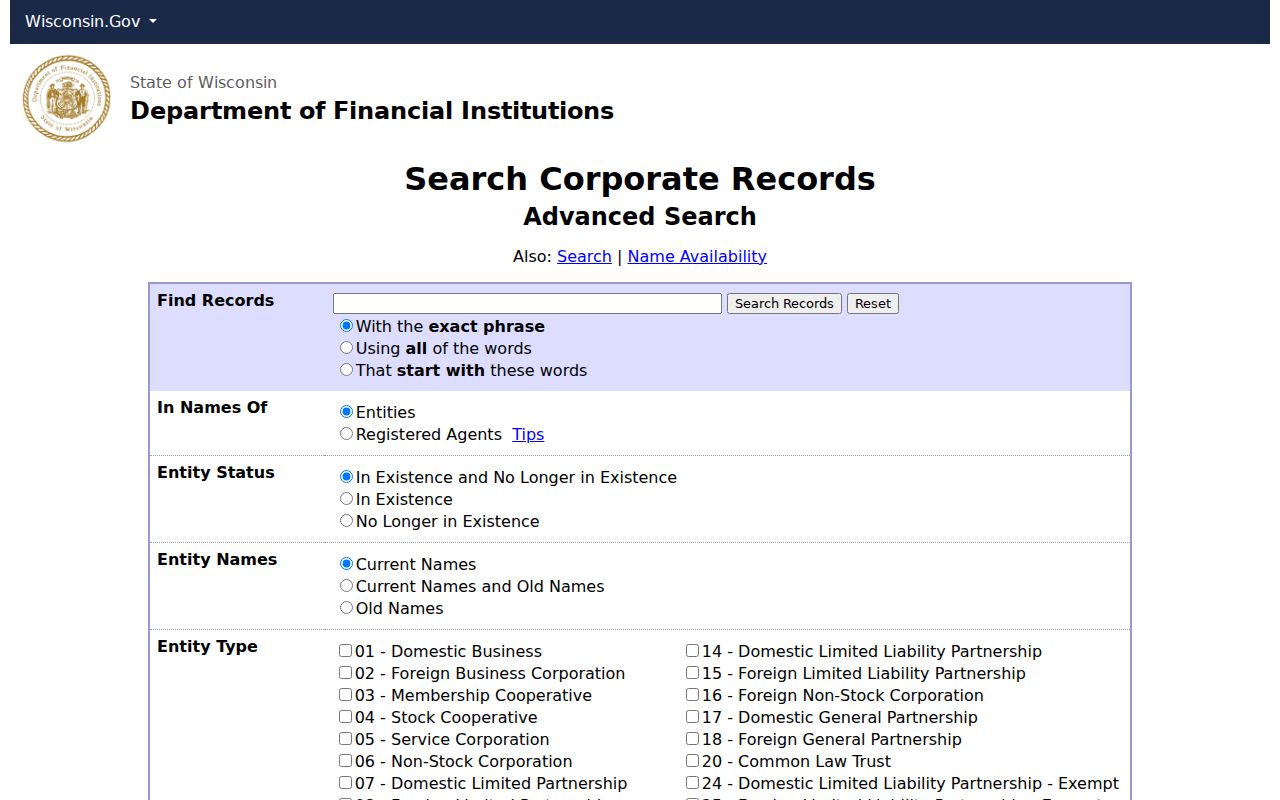
Let the entity result settle the legal name or agent. Then go back to the recorded deed for the actual land transfer, since that instrument governs the Pierce County property records.
River Falls Needs a County Match
River Falls spills across the county line into St. Croix County. That fact changes how a search works. A city name or a postal address alone cannot tell you which recorder holds the deed. Confirm the municipality and county in GIS first. Then follow the parcel number to the correct property report. Without an APN, a request for a deed or tax bill can land in the wrong county.
Neighbor parcels raise the same issue. Two houses can face the same road yet sit in different towns or counties. Check each parcel separately in its own county system. River Falls addresses commonly carry ZIP 54022, but postal boundaries never define county jurisdiction. For a property on the city's edge, keep the county, municipality, school district, and parcel number together before requesting a deed or permit file.
Protected Addresses Can Change a Search
Some addresses are hidden on purpose. Wisconsin DOJ's Safe at Home Address Confidentiality Program exists for eligible participants. It gives them a substitute address for public-record use. A protected owner may not surface through an ordinary mailing or situs clue. A missing address is not proof that a person holds no property interest. Respect the program when reading any Pierce County property record.
Wisconsin court policy also masks sensitive data. Sealed categories include Social Security numbers, credit-card information, and passwords. The list also covers victim or witness names in listed case types. It extends to certain dates of birth and addresses. Older recorded documents can still contain these details. Avoid republishing them in a records request. The Wisconsin Safe at Home program explains how the substitute-address protection works.
Address confidentiality is worth keeping in perspective. Use owner data only for a lawful property purpose, and skip guessing about a protected person's location or holdings.
Limits on a Pierce County Owner Search
A Pierce County owner lookup has real limits. It points to the owner of record named in a tax roll entry or a recorded instrument. It does not establish who lives at the property. It cannot confirm that every interest has been found or that the title is clear of claims. The GIS map carries its own accuracy disclaimer, and the land-record portal describes its index as general information rather than a title opinion.
Wisconsin public-record law also builds in exceptions. Safe at Home substitute addresses, sealed court records, confidential vital certificates, and court redactions can each shape what appears in a deed or tax record. Treat any blank field as unknown. Treat it never as evidence of absence.
Lawful use. Use owner information for property research, a transaction, or a legitimate record question. Do not use it to stalk, harass, threaten, or harm anyone.