
Trace Pierce County Owners Backward
Begin with the newest recorded transfer. Step back through grantor names. Mind the gaps. Pierce County does not publish the date ranges of its online deed index or its older volumes, so the table separates working resources from true blanks. A 1908 atlas or a library index offers place and household clues, but neither replaces a recorded instrument in the title chain.
| Transfer or source | Known date range | Where held | How it helps |
|---|---|---|---|
| Current deed index | Online start year not located | Pierce County Register of Deeds | Recorded grantor, grantee, and land description |
| Older deed books or microfilm | Exact runs not located | Ask Register of Deeds, county archive, or catalog | Earlier conveyances beyond a web index |
| 1908 Standard Atlas | 1908 map | Wisconsin Historical Society | Village, city, and township plat context |
| PCHA plat and tract holdings | Varied; exact runs not located | Bay City archive | Map, tract, and local-history leads |
| Local census indexes | 1900, 1910, 1920 River Falls | PCHA publications | Connect an old occupant or name to a place |
For recent transfers, start with the assessor's current owner of record. Read the newest deed. For a pre-digital owner, keep the legal description stable. Move into deed books or archive materials from there. The question may concern a house or a family rather than title. In that case, pair the conveyance with census, obituary, newspaper, and atlas clues.
The Grantor Becomes the Next Search
A grantor gave an interest away. A grantee received it. In a backward chain, the latest grantee anchors the start, and the grantor on that deed is the next earlier party to trace. Pierce County's public land-record portal does not expose its post-login search fields, so confirm the exact name and date filters with the Register of Deeds. The recorder's staff can state what the index supports.
- Find the present tax-roll owner and note the parcel number and legal description.
- Locate the newest deed that matches that land, then record its grantor, grantee, date, and index reference.
- Search the grantor as the next earlier grantee, checking that the deed describes the same parcel or its predecessor lot.
- Repeat until an index gap appears, then ask where the older book or microfilm is held.
- Grantor
- The party shown as transferring an interest.
- Grantee
- The party shown as receiving it.
- Chain of title
- The sequence of recorded transfers and related instruments for one legal description.
- Legal description
- The land description used in the instrument; it may outlast a street name.
Old Addresses Can Break a Name Search
Older instruments rarely match a modern mailing address. The street name may differ, and a deed may rely on a lot and block or a rural public-land-survey description instead. The situs address may not appear at all. Preserve the recorded description exactly and use it to link each transfer in the chain. Check subdivisions against the recorded plat. Rural land calls for the section, township, and range, or the metes and bounds.
Pierce County GIS exposes Plat Type, Plat Description, Block, Lot, Acres, Section, Township, and Range for each parcel. Use those fields to test a description. The 1908 atlas locates village and township layouts, while PCHA holds plat maps and select tract records. When a lot was split, a plat vacated, or an address changed, an old instrument can look unrelated until the map clues are reconciled.
No street-renumbering or ZIP realignment year is published. Treat nearby landmarks and historical place names as leads only. Verify each one against the deed description.
Reading the Pierce County Chain in Reverse
The chain is a sequence, not a roster of everyone ever tied to an address. Each transfer must cover the same land. Watch for entities. When a deed names an LLC, trust, estate, personal representative, or life tenant, preserve that capacity and search it exactly as written. A bare personal name skips entity transfers. It can also attach a different property to the timeline.
- Start with the latest instrument and confirm the parcel's legal description.
- Write each transfer as a row: date, grantor to grantee, deed type, and book/page or document reference when shown.
- Use the grantor as the next grantee search, then check whether the land description continues or changes.
- Mark a gap as unverified and ask the custodian or archive which older source might cover it.
- Grantor / grantee
- The parties named as transferor and recipient in an instrument.
- Chain of title
- The sequence of recorded transfers for the parcel.
- Book and page
- An older volume locator if used in the index; Pierce County runs need confirmation.
- Parcel continuity
- The check that each deed's legal description concerns the same land.
Pierce County's Online Cutoff Is Unknown
Pierce County publishes no first year for its online deed index and no imaging cutover date. Nor does the county say whether earlier books are scanned, microfilmed, or held in a particular room. A blank result is an access gap. An empty screen proves nothing about earlier owners.
Ask the Register of Deeds directly. Which name, parcel, document, or legal-description search does the office support, and which historical volumes cover the target years? If staff point to a library or archive, record the volume title and years before the next request. The general index is a finding aid. It is not a complete title conclusion.
No courthouse fire or destruction event stands in the record. Never blame lost records for a missing chain.
Archives Extend Pierce County House History
The Pierce County Historical Association in Bay City holds plat maps and cemetery indexes. It also keeps select tract records, manuscripts, obituaries, and newspaper announcements. The association is volunteer-staffed. Contact it before traveling. Its publications include River Falls census indexes for 1900, 1910, and 1920. It also offers township histories and atlas reprints.
Ellsworth Public Library's Local History Room offers local and Wisconsin reference works. Cardholders gain Ancestry Library Edition, HeritageQuest through BadgerLink, and links to historical indexes. The UWRF Area Research Center serves Pierce and nearby counties. It may hold local-government and manuscript material. Such collections link names to parcels. No archive replaces the deed itself.
The PCHA archive description lists the local holdings used in house-history research.
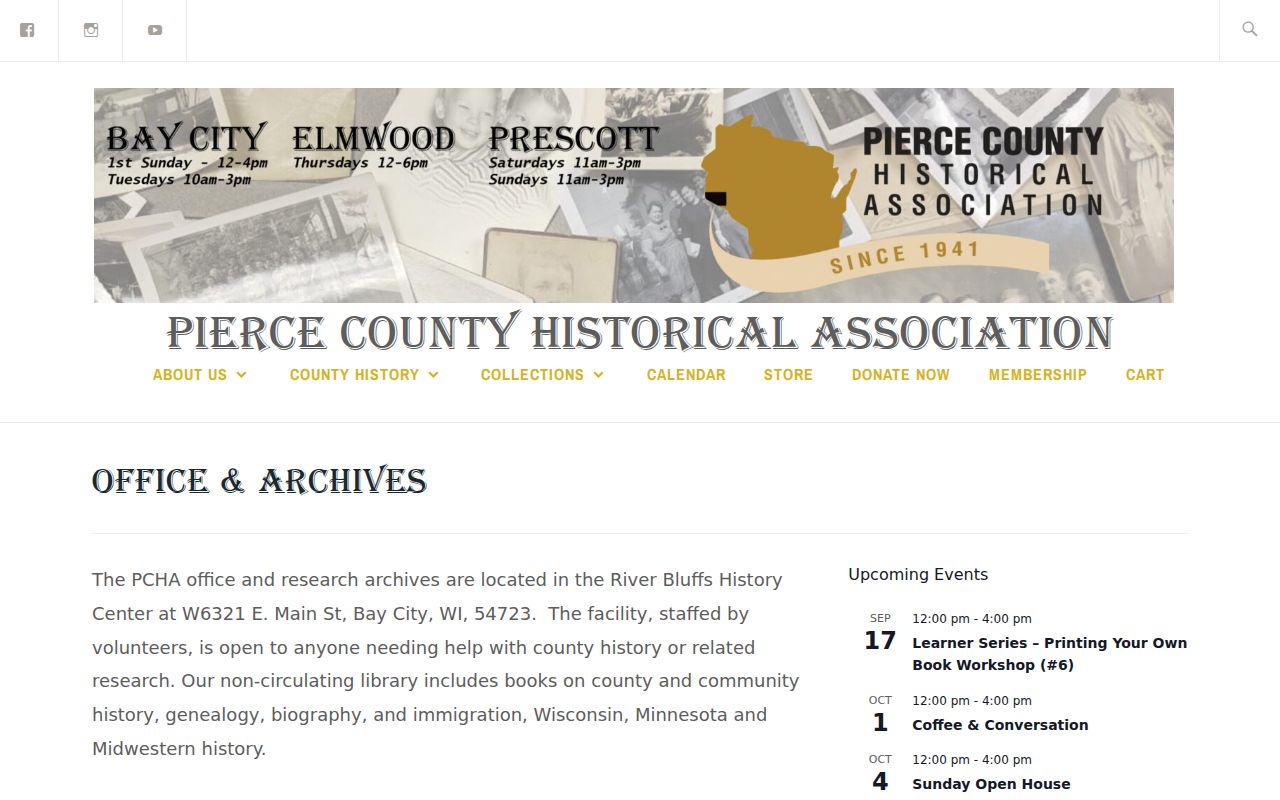
Pair a tract record with a plat map. It often beats an obituary alone. The Ellsworth library history page describes its local collection and research tools.
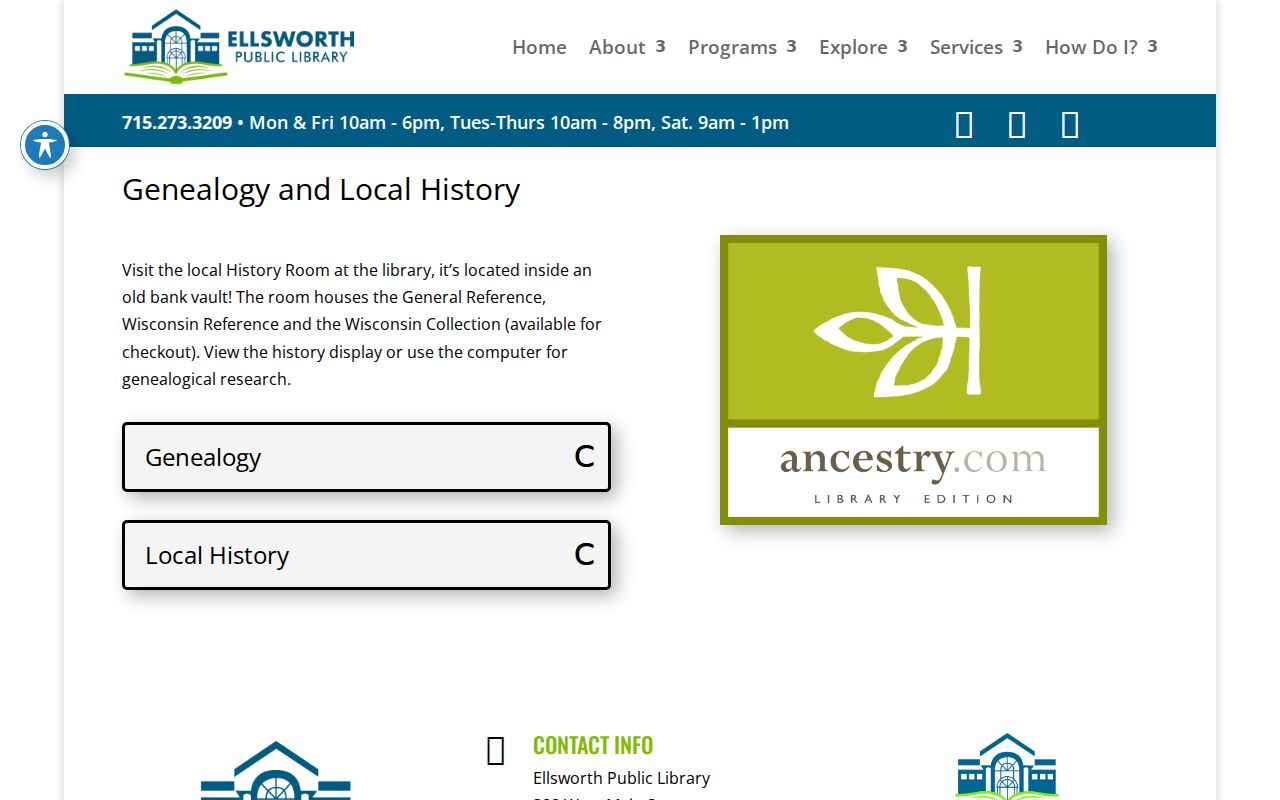
Indexes supply the leads; the deed description confirms them.
The 1908 Atlas Is a Map Clue
The Wisconsin Historical Society has digitized its Standard Atlas of Pierce County. Its plats cover villages, cities, and townships. The Pierce County Historical Association sells reprints of the 1877–78 and 1895 atlases too. A family name can jump off these maps fast. So can an old subdivision, town, or lot pattern. Just remember one thing. The map dates are not the years covered by the Register of Deeds index.
A good workflow starts with the parcel's modern legal description. Locate the likely community and lot on the atlas. Then compare the names and boundaries against a recorded conveyance. Historic maps shine when an old street address has changed. They shine again when an owner name repeats across generations. They cannot prove a modern lot line. For that, the deed records carry the final word.
The 1908 atlas image gives you the old map view for that comparison.
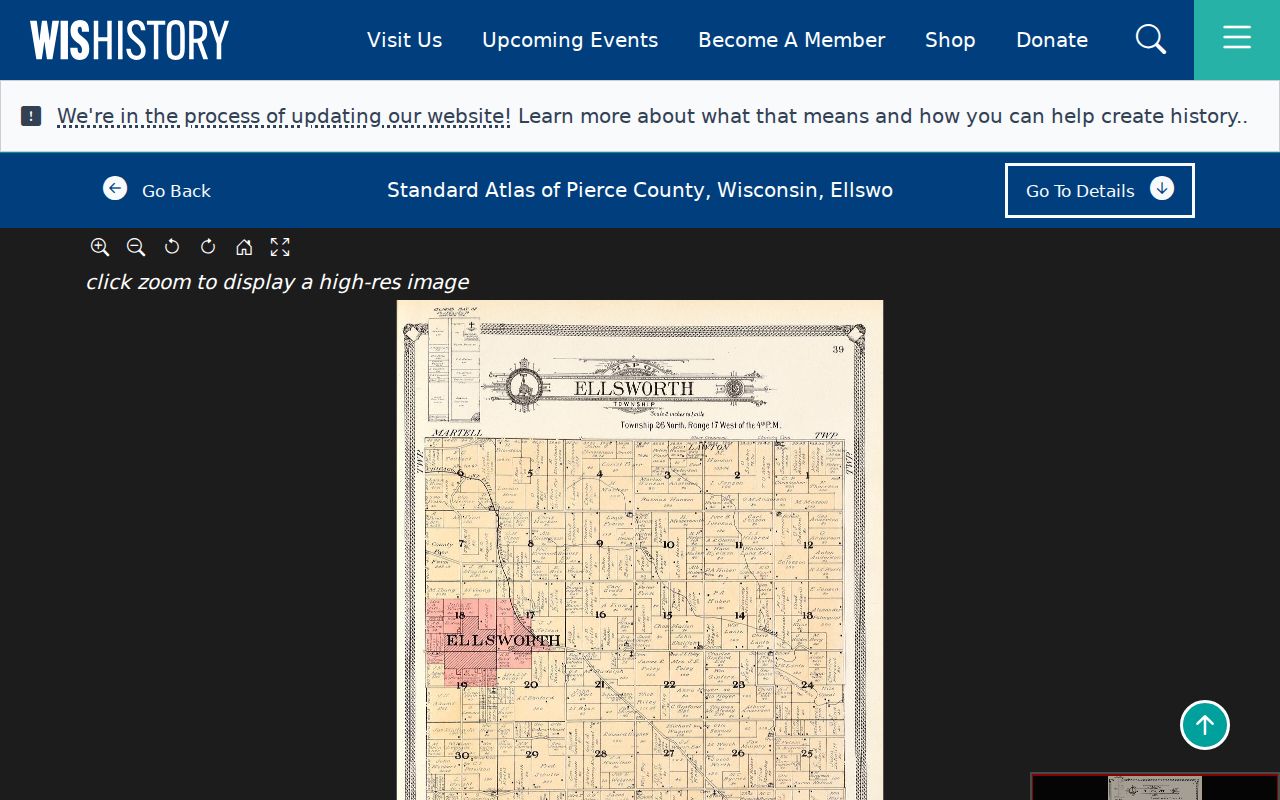
Let the 1908 atlas point you toward a likely parcel. Then let the deed itself prove the transfer was recorded.
Tracing Former Owners in Pierce County
Every Pierce County ownership chain starts with the parcel. Its reach depends on deed book and index coverage. The Register of Deeds publishes no public year-range statement. Ask the office directly rather than assuming a portal starts with the oldest county conveyance. A chain can thread through deed volumes, microfilm, archive collections, old plats, and family-history sources. Each may hold a different piece.
Personal-history research works best when a deed is paired with a census entry, obituary, newspaper announcement, or historical atlas. Title research takes the opposite approach. Keep the chain anchored in the legal description and the recorded instruments themselves. The Wisconsin Historical Society's pre-October 1907 vital indexes can add a name and date. They can also supply a county, volume, and page. Fuller historical material often sits on microfilm.
Lawful use. Use a former-owner chain for title work, property diligence, or house history. Do not use it to track, stalk, harass, or harm a living person.